
The University of Nebraska-Lincoln invites nominations and applications for the position of Dean of the College of Journalism and Mass Communications.

The University of Nebraska-Lincoln seeks an innovative, inspiring and forward-looking academic leader to serve as the next Dean of the College of Journalism and Mass Communications. The incoming Dean will have the opportunity to direct the vision of an energetic and engaged faculty, staff and student population. The new Dean will enjoy the advantages of a growing endowment with strong alumni and media support.
The college’s educational experience is grounded in experiential learning, giving students meaningful opportunities to apply their skills in professional, real-world settings through strong connections with media, industry, and community partners. The Dean will have the unique opportunity to lead curricular innovation during a time of rapid change in journalism, media and communication and help define the future of the profession.
The college looks to an exciting future under the direction of an outstanding leader to further broaden and deepen its impact.
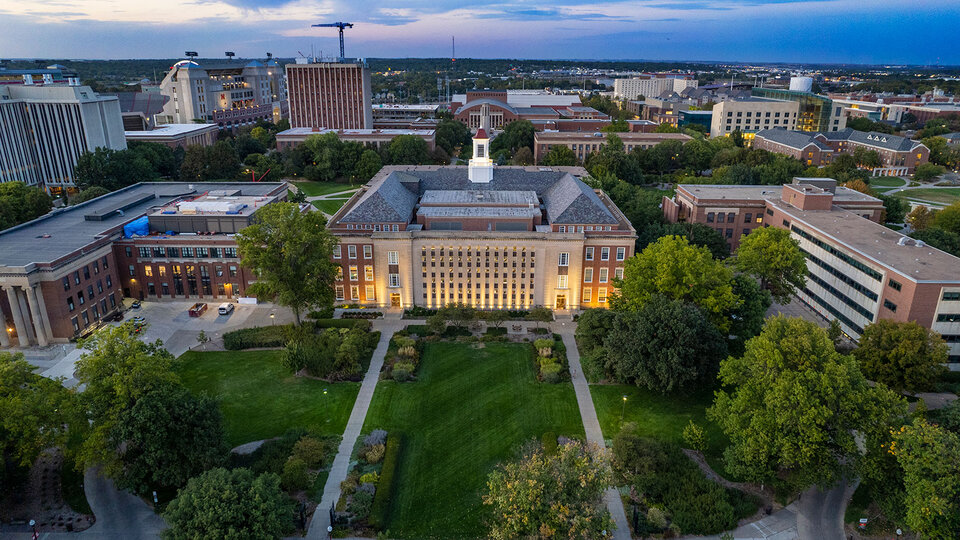
University of Nebraska-Lincoln
IN OUR GRIT, OUR GLORY
We are Nebraska.
We believe in the power of every person. We don't rest on our strengths—we stretch them. Sweat them. Combine them. Growing flexible, nimble and strong minds. That's how we do big things.
FOR MORE THAN 150 YEARS, A LEADER IN HIGHER EDUCATION
Founded as a land-grant institution in 1869, the University of Nebraska–Lincoln is the flagship institution among the four universities of the University of Nebraska system and serves as both the land-grant and comprehensive public research university of the state of Nebraska. UNL ranks among the world’s leading universities and is the state’s primary intellectual center through its missions of teaching, research, and service. UNL is a proud member of the Big Ten Conference, the Big Ten Academic Alliance, and the Association of Public and Land-grant Universities.
UNL is designated in the Carnegie Classification system as an R1 research university with very high research activity, is one of the nation’s leading public teaching institutions, and is a research leader with a wide array of grant-funded projects aimed at broadening knowledge in the sciences and humanities. UNL is among nearly 300 U.S. universities that have a Community Engagement classification from the Carnegie Foundation for its wide-ranging outreach efforts across the state.
The university’s land-grant mission creates a state-wide responsibility to serve the needs of Nebraska and its citizens, and through Nebraska Extension and its partnerships with federal, state, and county agencies, the university has an outreach program in each county in the state. By connecting everything it does to its research, scholarship, creative activity, and engagement, the university ensures these innovations shape the education provided to its undergraduate, graduate, and professional students.

In June 2026, the U.S. Department of Education and the Higher Learning Commission formally recognized the joint accreditation of the University of Nebraska–Lincoln and the University of Nebraska Medical Center, integrating the flagship, R1, land-grant institution with the research and clinical expertise of UNMC. This effort marks an important step in strengthening the University of Nebraska’s academic standing, aligning with national peers, and expanding opportunities for collaboration — opening even more pathways for current and future learners, accelerating fundamental research and life-changing discoveries, and deepening service and contributions to the people of Nebraska. The combined reporting structure also strengthens the university’s national visibility and better reflects its overall research enterprise. Both universities will continue to operate as separate institutions within the University of Nebraska system with distinct missions and academic programs.
UNL's nine colleges — Architecture, Agricultural Sciences and Natural Resources, Arts and Sciences, Business, Education and Human Sciences, Engineering, Hixson-Lied Fine and Performing Arts, Journalism and Mass Communications, and Law — provide exceptional breadth and depth of opportunity in the sciences, liberal arts, and professional disciplines, with strong student enrollment, student diversity, and sponsored research funding. Experiential learning is highly valued at UNL and is a requirement for graduation. Every college offers a range of experiential opportunities for students.
Academic Excellence
While a research-intensive institution, UNL faculty possess an extraordinary and primary focus on educational excellence. The university offers more than 100 undergraduate majors and over 170 graduate degree and certificate programs in its nine academic colleges. UNL holds access to high-quality education as a principal part of its mission. In congruence with this value, the university enrolled just over 23,500 students pursuing undergraduate, graduate, and professional degrees in fall 2026.
In the 2026 edition of U.S. News & World Report, the University of Nebraska–Lincoln was ranked No. 84 among public universities in the United States and No. 158 nationally among all universities. UNL was also recognized as No. 112 in Best Colleges for Veterans, reflecting its continued commitment to serving military-affiliated students.
UNL, also known as "Big Red" in Division I sports, lifts Nebraska's visibility nationally and allows the university to compete both athletically and academically. Nebraska athletes have earned more Academic All-American awards and NCAA Top Eight Awards than any other D1 institution.

The university is regularly named a top research institution whose students are awarded Fulbright scholarships, and UNL undergraduates consistently succeed in prestigious national scholarship competitions. In 2026, UNL was recognized as a Gilman Scholarship Top Producer.
The general education curriculum, Achievement-Centered Education, is built on student learning outcomes that answer the fundamental question: “What should all undergraduate students — irrespective of their majors and career aspirations — know or be able to do upon graduation?” UNL also provides attractive professional and graduate education offerings and aims to foster a meaningful and excellent graduate student experience through its individual development plans, Preparing Future Faculty program, and Teaching Development program.
UNL students learn from faculty who create new knowledge, who are leading scientists, artists, and scholars, and who care deeply about students’ success. The university is home to a distinguished standing faculty of over 1,800 engaged in groundbreaking research and professional practice that crosses disciplinary and professional boundaries. UNL faculty regularly receive prestigious external honors and awards for research, scholarship, and creative endeavors.
In addition to its regional and national collaborations, the university brings international dimensions to its programs through the faculty’s global engagement, a student body that includes students from throughout the world, exchange agreements with other universities abroad, and the incorporation of international components in a variety of courses and curricula.
Research, Creative Activity and Economic Development
For the eighth consecutive year, the University of Nebraska system ranks among the world’s top 100 academic institutions for U.S. utility patents — most recently at No. 49. NUtech Ventures, UNL’s technology commercialization arm, brought in $5.3 million in licensing revenue in the fiscal year 2025. Beginning with fiscal year 2023, the National Science Foundation’s Higher Education Research and Development Survey combines the federally-funded research expenditures of UNL, the University of Nebraska Medical Center, and the NU System Office of the President to align more closely with the reporting of other Big Ten institutions and the Association of American Universities. At the end of fiscal year 2024, combined research growth reached $657 million, a 57.5% increase over the past 10 years.

UNL has invested $1 billion over the last ten years in significant academic and research facilities, including new construction and renovations. Plans for additional projects are underway. In 2018, the University of Nebraska System launched “Only in Nebraska” — a campaign across all four campuses to encourage at least 150,000 benefactors to give $3 billion to support students, faculty, academic programs, and research to address the needs of the state. This ambitious goal has already been achieved, with UNL meeting its individual goal of $1.5 billion in April 2026.
While the campaign has three key areas, the top priority is a relentless focus on student access and success supporting scholarships, experiential learning, collaborative research initiatives, global experiences, and graduate and professional student fellowships. Support for endowed faculty chairs and professorships will help UNL continue to recruit and retain faculty who are a source of intellectual capital for the state as well as the inspiration and teachers of the next generation of students. Transformational research and innovation are the third key area, providing support for research and innovation that bring solutions and discoveries to the state and improve outcomes for Nebraskans.
A 2025 Tripp Umbach Economic Contribution Report found the NU System generates $10 for every $1 the state invests. The report also found UNL's direct annual overall economic impact across the state of Nebraska was $3.06 billion, including directly or indirectly supporting 25,121 jobs across the state.
N150 Vision
Launched during its sesquicentennial in 2019, the university embarked on a 25-year N150 Vision and launched a five-year N2025 strategic plan, which established aims, strategies, expectations, and measurable targets for student success, research, experiential learning, inclusive excellence, global engagement, community partnerships, and institutional innovation. Upon completion of the N2025, UNL developed Our Bold Path Forward, a strategic framework which was launched in fall 2026 and is directly aligned with the pillars and the strategic performance indicators outlined in the University of Nebraska system's Odyssey to Extraordinary. UNL colleges and divisions will align annual planning efforts, targets, and strategic priorities with both campus and system-levels plans.

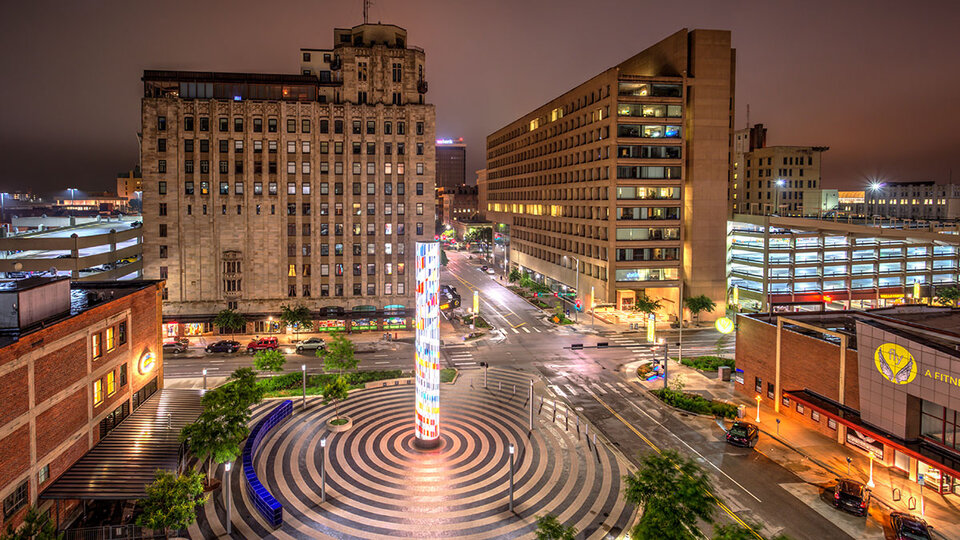
Lincoln, Nebraska is the capital city of the state and is known for its vibrant mix of history, culture, and modern amenities. With a population of around 300,000, it’s the second-largest city in Nebraska and serves as a major economic and educational hub, anchored by the University of Nebraska–Lincoln. The city’s university presence infuses it with a youthful energy, driving research, sports culture, and diverse cultural events, including art exhibitions, theater, and music festivals. Lincoln has earned recognition for its high quality of life, low cost of living, and friendly Midwestern charm.
The city’s history is deeply tied to its agricultural roots, but in recent years, Lincoln has experienced rapid growth in technology and startup sectors, giving it a modern edge while maintaining a strong connection to its past. The Haymarket District, a revitalized historic area downtown, blends old and new with trendy restaurants, coffee shops, art galleries, and unique shops housed in restored brick warehouses. Lincoln’s commitment to green spaces is notable, with over 130 parks, including the sprawling Pioneers Park, which offers hiking trails, wildlife sanctuaries, and an outdoor amphitheater.
As the capital city, Lincoln is significant as the seat of the Nebraska state government, housed in the impressive Nebraska State Capitol building, known for its rare Art Deco design. Lincoln is home to people from a variety of cultural and international backgrounds and offers community organizations, cultural events, and faith communities that reflect the people who call the city home. It is also home to a highly engaged community, with active civic participation and events that reflect the diverse backgrounds of its residents. Lincoln’s economy includes a wide range of sectors like technology, manufacturing, banking, insurance, and healthcare, while its central location makes it a transportation and logistics hub within the Midwest.
Whether enjoying a Nebraska Cornhuskers football game, exploring the extensive network of bike trails, or attending one of the many cultural events at the Lied Center for Performing Arts, Lincoln offers a blend of small-town warmth and big-city opportunities. Its growing food scene, affordable housing, and reputation for being a welcoming place make it a city where many come to study, work, and build a life.

The College of Journalism and Mass Communications is an inclusive community of faculty and staff committed to providing a top-quality, hands-on education to emerging professionals in advertising, broadcasting, journalism, public relations, and sports media and communication. The college is an important contributor to education, research, creative activity and outreach at the University of Nebraska-Lincoln. The faculty upholds the core principles of journalism and mass communication education and seeks to be leaders in the evolving communications environment. Through excellence in teaching, research and creative activity, the college educates ethical, socially responsible, well-rounded, flexible, fair and quick-minded graduates who carry those traits into the world.
The strength of the college is exemplified by the success of its students and graduates and its numerous professional partnerships. The college is one of 11 chosen to be part of the Carnegie-Knight Initiative on the Future of Journalism and the only collegiate recipient of the Robert F. Kennedy Journalism Grand Prize. Its students have consistently finished in the top 10 in the Hearst Journalism Awards annual competition; this year, students won 1st and 3rd place in the National Writing Championship. The college was also the 2022 national champion in the Public Relations Student Society of America Bateman Case Study Competition.

The college programs have been nationally accredited by the Accrediting Council on Education in Journalism and Mass Communications since 1972 and are the only accredited journalism offerings in the state of Nebraska. It offers bachelor’s and master’s degree programs that prepare students for careers in a wide range of media positions. Enrollment in the college is approximately 1,100 undergraduate and 75 graduate students. Students experience a variety of special hands-on learning opportunities including: The Experience Lab where students gain hands-on experience working with faculty liaisons and professional mentors, building on their academic skill set while exploring their professional interests in one of the college's media outlets; first-year learning communities; Jacht, a student-run advertising agency; 90.3 KRNU, a student-run FM radio station that just underwent an equipment upgrade; the Nebraska News Service, which provides state government coverage for smaller Nebraska newspapers and radio stations; an annual international photojournalism trip; investigative depth reporting such as a recent investigation into the Nebraska prison system; and an advertising and a public relations national competition team.
The college has 35 full-time faculty members plus a large number of highly qualified part-time faculty from industry. The college faculty includes two Pulitzer Prize winners, recipients of Emmys in broadcasting and a National Gold ADDY award honoree. The journalism faculty includes veterans from Business Week, the Miami Herald, the Detroit News, ProPublica and the Tampa Bay Times. The broadcast faculty includes individuals who have held key positions with news stations in Omaha, Kansas City, and San Francisco. The advertising and public relations faculty includes former executives at Leo Burnett, J. Walter Thompson, IGN Entertainment, and the U.S. Army Corps of Engineers.

The Dean reports directly to the Executive Vice Chancellor and is the chief academic and administrative officer of the College of Journalism and Mass Communications. The Dean has the responsibility for the strategic, programmatic, financial, fundraising, and management operations that support the mission and vision of the College of Journalism and Mass Communications and its role within the university and across the state. The Dean will join a group of fellow deans and campus leaders who are collaborative, supportive and committed. The Dean works alongside campus leaders to advance the values and mission of the university, ensuring the College’s efforts are in alignment with the overall priorities and goals.
The incoming Dean will:
- Have the opportunity to define and implement the college’s next strategic vision with the input of talented faculty, staff, students, alumni and external advisory boards;
- Further the development of a relevant and distinctive identity for the college;
- Serve as a public voice to develop the reputation of the college externally on national and international stages, within the profession and private industry;
- Assure the continued prominence of the faculty by prioritizing the recruiting and retention of distinguished faculty at all levels;
- Support and engage staff, encourage their growth, and ensure they play an active role in the College's success and future;
- Cultivate academic programs that demonstrate professional relevance, impact, and sustainability, and champion the distinct, yet interconnected disciplines in the college;
- Work to fully realize and enact the college and university commitment to community and belonging, ensuring that all individuals and interactions matter;
- Seek out and continue valuable collaborations with other academic units and partners;
- Promote and support a strong research and creative activity agenda, including attracting external funding from federal agencies, corporations and foundations and continue to grow the College’s portfolio by expanding partnerships and pursuing new opportunities;
- Appreciate and foster the dual mission of research/creative activity and teaching to maintain an academic and professional focus;
- Assure that the college continues to serve its students with academic programs of the highest quality and effectiveness, promoting and sustaining practices for experiential learning, student success, persistence, retention, graduation and placement;
- Continue an upward trajectory of enrollment in the college;
- Engage alumni and other external supporters to advance the mission of the college;
- Take a leading role in attracting interested donors to support the college’s mission; and
- Be an engaged academic leader at the university, working collaboratively and advancing the overall mission and priorities of the campus.

Successful candidates will have deep experience in and awareness of both the professions and academia and will bring a record of achievement that reflects a commitment to excellence in undergraduate and graduate education, research and creative activity, and the public and professional impact of the College of Journalism and Mass Communications.
Specifically, candidates should demonstrate:
- A Ph.D. or terminal degree in a related discipline with an outstanding record of scholarly or creative achievement and/or an outstanding record of experience in the industry, with accomplishments commensurate with the rank of full professor in the college.
- A track record of successful leadership in a complex academic, professional, or organizational environment, including experience leading diverse, multifaceted teams or organizations; a significant record of success as an administrator whose credibility, communication skills and collaborative management style can energize a dynamic college.
- An understanding of the academic enterprise and shared governance that informs decision-making.
- Strong business and financial acumen, including a focus on managing resources and aligning investments with institutional priorities.
- The ability to cultivate academic programs, research and creative activity that demonstrate professional relevance, impact, sustainability and champion the distinct, yet interconnected disciplines in the college.
- A record of building effective and collaborative relationships with a broad range of constituencies both across the university and with community partners and external audiences.
- A strong commitment to student success, closing equity gaps, fostering access consistent with UNL’s mission as a land-grant institution.
- A commitment to recruiting, supporting, and retaining an accomplished and diverse faculty and staff, and cultivating an inclusive campus community.
- An understanding, capacity, and enthusiasm to advance development and fundraising activities.
- The highest level of integrity.
A highly qualified candidate will also:
- Embody the role of advocate and champion for the College within the University setting and in the broader communities statewide and nationally;
- Possess and model a bold, creative, and systems-thinking approach that focuses on integrative solutions to complex problems;
- Take bold, courageous risks to achieve excellence;
- Cultivate a vision for the future by enthusiastically embracing new ideas and thinking beyond what is known today;
- Demonstrate comfort with and knowledge of the range of disciplines and scholarship represented through the college;
- Model an ethic of care and cultural consciousness for all college constituents, with a visible and accessible presence;
- Listen actively and model feedback to foster transparency, awareness, and understanding of decisions and outcomes throughout the college;
- Exhibit an authentic curiosity and inspire others;
- Be energized to work in a complex organization and embrace the multifaceted needs of the college and university community, including students, staff, all faculty, and external partners;
- Embrace the challenges and unknowns of higher education today including the enrollment landscape and bring meaningful solutions for growing the reach and impact of the college; and
- Have navigated technological changes, adapting curricula and/or and research and creative activity for emerging media technologies and evolving digital platforms, such as AI.
Compensation
Nebraska offers an attractive compensation and benefits package, commensurate with the successful candidate's background and experience.
How to Apply
We will begin reviewing candidates immediately and will continue until the position is filled. Priority consideration will be given to those materials received by November 9. Applications should consist of a letter summarizing motivation, relevant leadership experience, and qualifications and a detailed curriculum vitae.
Applicants should go to employment.unl.edu and search positions using requisition number F_260115, click on “Apply to this Job” and complete the form. Upload application materials. The names and contact information for at least three professional references will be requested from candidates who advance to the interview stages.
Questions and nominations can be sent in confidence, to:
Kathy Farrell, Search Chair
James Jr. and Susan Stuart Endowed Dean, College of Business
University of Nebraska-Lincoln
kfarrell2@unl.edu
and
Allison Wortmann
Academic Personnel and HR Specialist
University of Nebraska-Lincoln
allison.wortmann@unl.edu
For questions and assistance with the application process, contact Allison Wortmann, Academic Personnel and HR Specialist, at allison.wortmann@unl.edu or by phone at (402) 472-4175.
The University of Nebraska-Lincoln seeks to attract and retain a high performing and collaborative workforce. UNL is committed to providing a work environment and culture that fosters personal and professional success where every person and every interaction matters. The University is proud to be one of Nebraska’s preferred and largest employers where individuals are able to participate and contribute to their full potential.
The University of Nebraska does not discriminate based on race, color, ethnicity, national origin, sex, pregnancy, sexual orientation, gender identity, religion, disability, age, genetic information, veteran status, marital status, and/or political affiliation in its programs, activities, or employment. See equity.unl.edu/notice-nondiscrimination.